The UAE property market: a correction cycle and investment opportunities
The UAE property market is entering a phase that is rarely straightforward. After several years of strong growth, talk of overheating, correction and risks is becoming increasingly common — during such periods, the market becomes most sensitive to sentiment and the news cycle. Some investors freeze in anticipation, whilst others rush to exit. And it is precisely at this moment that opportunities arise for those who know how to view the market through the prism of cycles, rather than headlines.
This article is based on practical experience of working in crisis markets, including the Ukrainian property market during the war. Such experience provides a unique perspective: neither panic nor excessive optimism, but an understanding of how the market behaves under pressure, which segments remain resilient, and where strong entry points are forming.
This material will be useful to investors who are considering Dubai as an investment destination and wish to understand current market dynamics, setting aside unnecessary emotions and relying on the logic of market cycles.
Market cyclicality: why a correction is not a disaster
No property market moves only upwards. Growth is always followed by a cooling-off period, a correction and a new cycle — this is a self-regulating mechanism that allows the market to maintain a balance between supply, demand and expectations.
A correction is often perceived as a warning sign. In practice, however, it merely adjusts inflated expectations, reduces speculative pressure and brings prices back to more realistic levels. At the same time, it never affects the market uniformly — the segments where growth was most aggressive are the most sensitive.
Historically, it is precisely during phases of uncertainty that the greatest number of strong investment opportunities arise. When some market participants react emotionally whilst others adopt a wait-and-see approach, there is scope for negotiation, discounts and considered decisions. For an investor who understands the logic of cycles, this is the entry point.
Market behaviour under stress: lessons from Ukraine’s experience
Any crisis initially affects market participants’ behaviour rather than the figures themselves. This is particularly noticeable in property: decisions to buy and sell are often driven by emotion rather than calculation. The market goes through a predictable initial phase — the number of transactions falls, buyers become more cautious, and sellers begin to feel the pressure due to a drop in liquidity. At the same time, a crisis rarely leads to an immediate collapse in prices; more often than not, activity is the first thing to disappear. The gap between sellers’ expectations and buyers’ willingness to pay is considered the start of a correction.
The Ukrainian market followed precisely this scenario in the early months of the crisis. Liquidity fell sharply, particularly in the mass market segment. Some owners began listing properties more quickly than usual: some sought to secure their capital, whilst others needed access to cash. Properties with significant discounts appeared: the market had not collapsed; rather, specific sellers had an urgent need for liquidity.
During this period, buyer behaviour was divided. Most chose to wait and see. However, some investors — those with spare cash and a multi-year horizon — continued to actively engage with the market. They understood that, during a phase of emotional reaction, opportunities arise that are not available in a calm market.
After 2–3 years, the picture changed. The market adapted, demand returned, and transaction activity recovered. In a number of prime locations on the Ukrainian market, prices rose by an average of 25–30% relative to the levels seen during the period of maximum uncertainty, as a result of restored confidence, a shortage of liquid properties, and pent-up demand.
The behaviour of people and capital during crisis phases follows similar patterns regardless of geography: first an emotional reaction, then adaptation, followed by a shift in demand towards the most resilient segments. This experience provides a practical benchmark for assessing the situation in the UAE.
What is happening in the UAE property market today
Over the past few years, the Dubai property market has gone through one of the most active periods in its history. International demand, capital inflows, the migration of affluent buyers and high investment interest have created a sustained upward trend. Many segments have seen significant price growth, particularly in premium locations. But sustained growth cannot last forever.
There is currently a slowdown in the overall number of transactions, largely due to geopolitical uncertainty in the region. Historically, such a market reaction has been short-lived.
Buyer behaviour is mixed. Some investors have exited the market. Others have adopted a wait-and-see approach and want to see what happens next. A third group is actively seeking specific opportunities: discounted properties, urgent sales, and non-standard deals.
Sellers are also adapting. In the off-plan property segment, developers are not lowering prices — they are changing the terms: instead of the standard 60–80% payment schemes during construction, 20/80 plans are increasingly available, with a minimal initial deposit and the principal sum due upon handover, often with the option of bank financing through a number of major banks that are expanding their mortgage programmes once the property reaches around 30% completion. In the market for completed properties, the reduction in mortgage rates to 3.5% and the simplification of lending procedures have played a key role, enabling some tenants to become buyers.
Why the first few months of instability create a window of opportunity
The first few months of any market instability are almost always accompanied by an emotional reaction. Even experienced investors begin to assess risks more cautiously, some market participants adopt a wait-and-see approach, and decisions are increasingly driven by sentiment rather than figures. At this stage, a characteristic market imbalance emerges: the real value of assets changes much more slowly than market participants’ perception of that value.
Fear of losing profits or the expectation of a deeper decline forces some investors to exit assets more quickly than the situation warrants. Assets enter the market that, in a stable phase, would have been held by their owners for much longer. This creates localised discounts, which can be explained by the emotional decisions of sellers.
As a result, buyers with liquidity gain several advantages simultaneously:
properties become available at a discount, which would not be the case in a calm market;
their negotiating position is strengthened — sellers are more willing to discuss terms;
competition among buyers is reduced, as many adopt a wait-and-see approach;
access is gained to properties in prime locations that would not normally come onto the open market.
Investors who have spare capital, think long-term and are able to make decisions without emotional pressure benefit most in such conditions. These investors enter the market when the majority are simply waiting, which makes their entry points the strongest.
The window of opportunity rarely remains open for long. As the market adapts to the new conditions, the level of uncertainty decreases, and with it, non-standard offers disappear. Confidence returns, the number of distressed sales falls, and the buyer’s bargaining power weakens. The most attractive deals appear precisely at the start of a period of instability — during the phase of maximum emotional reaction, before the market has time to reassess the situation.
Likely correction: which areas are more sensitive
A correction in the property market never occurs uniformly. Even within a single city, different areas react differently depending on building density, the structure of demand, the level of supply and the type of buyers. Some locations remain stable due to a shortage of properties and steady long-term demand. Others, where price growth has outpaced actual demand, prove to be more sensitive to changes.
As a rule, the most vulnerable areas share three characteristics: a high concentration of new developments, uniform building styles, and a market focused on short-term investment returns. It is in such areas that competition between properties intensifies during a market downturn, and sellers are forced to be flexible.
Looking at the Dubai market, the following locations can be considered potentially sensitive areas:
Jumeirah Village Circle (JVC) — one of the most actively developed areas. The high density of new projects and the large number of similar properties create fierce competition among sellers. When demand falls, buyers are presented with a wide choice, which strengthens their negotiating position.
Jumeirah Lakes Towers (JLT) — an area with a high density of development and a significant volume of supply in both the primary and secondary markets. In a slowing market, this can lead to more flexible transaction terms and an increase in the number of negotiated sales.
Dubai Silicon Oasis is an area of mass demand with a large number of standardised properties. As supply expands, buyers become more selective, whilst sellers face pressure to adjust their prices.
Dubai South is a rapidly developing area with long-term infrastructure potential. Large-scale development and a significant volume of future supply may temporarily intensify competition between projects, particularly during a market cooling phase.
Sensitivity to market corrections does not mean that these areas are losing their investment appeal. For long-term investors, such segments may present an opportunity to enter the market at an attractive price during a correction.
Why the premium segment remains resilient
Premium property reacts to market changes in a fundamentally different way to the mass market segment. This is due not so much to price levels as to the structure of demand and the behaviour of owners. Buyers of premium properties view real estate as a long-term asset rather than a tool for short-term profit, and their decisions are significantly less influenced by market sentiment and news headlines.
The key factor in stability is limited supply. The number of truly high-quality properties in Dubai remains relatively small. These include:
beachfront residences and villas;
properties in gated private communities with a limited number of plots;
club residences with a high standard of service;
unique properties with distinctive features — offering views, architectural merit, or historical significance to the market.
The owners of such properties are rarely under financial pressure that would force them to sell urgently. They can afford to wait. This is why there is no mass release of properties at reduced prices in this segment.
And yet, isolated opportunities do arise: through an urgent need for liquidity, portfolio reallocation or private negotiations. According to observations by the Mayak Real Estate team, discounts here are possible at 10–15%, and in some cases up to 20%. Such deals rarely become public and most often occur through personal searches and direct contact with the owner.
The ultra-luxury segment: a different set of rules
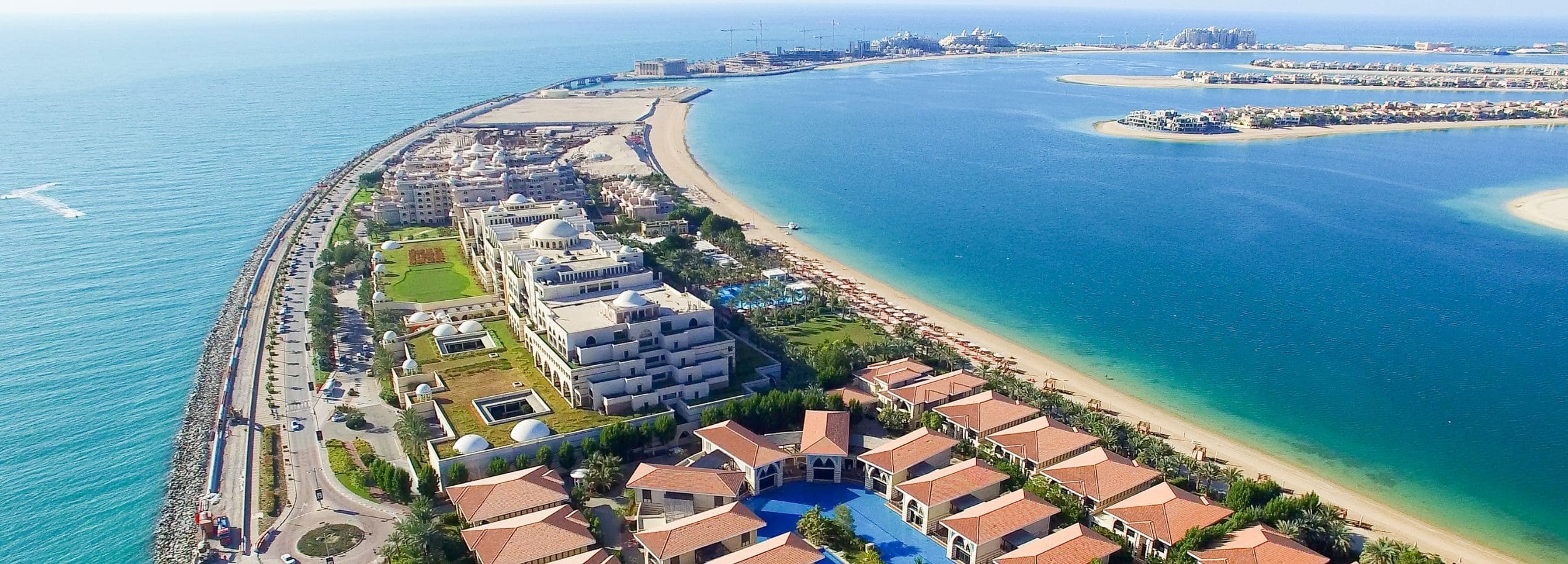
Ultra-luxury is no longer just a premium market, but a separate ecosystem. We are talking about villas and residences costing tens and hundreds of millions of dirhams. These are properties on Palm Jumeirah, private waterfront properties, mansions with direct beach access, and collectible assets with unique architecture. The key characteristic of this market is the impossibility of rebuilding a similar property elsewhere in the future.
The buyers here are a select circle of global capital for whom property is a means of preserving wealth and status, rather than a profitable investment in the traditional sense. This makes the segment virtually immune to short-term market fluctuations.
An important point to note is that large discounts in the ultra-luxury sector do not indicate market weakness. When a property purchased several years ago for 80 million dirhams is sold today for 130 million instead of the originally stated 160 million, this is not a fall in value but the realisation of a profit at a discount to expectations. The seller remains in profit, whilst the buyer acquires the asset below the asking price.
Investment strategies and property selection criteria during a crisis
During a crisis, the market draws a clearer distinction between speculative purchases and strategic investments. Whilst many properties appreciate almost automatically during periods of active growth, the principle of quality comes into play during a cooling-off phase: not all assets benefit, but only the most resilient ones.
The most rational approach at present is to buy with a view to long-term holding. The focus is on liquid properties in locations with limited supply, good infrastructure and clear rental prospects. Such assets remain in demand regardless of the current phase of the cycle and are the first to recover activity once the market stabilises.
A separate opportunity lies in seeking out specific bargains. These arise where the seller prioritises speed over the highest possible price. Direct negotiations, working with off-market offers and access to private deals allow one to enter the market below average levels. However, this approach requires swift decision-making, a clear understanding of the property’s true value and the availability of free capital.
A telling sign of the current moment is the increased activity of major international investment funds. They view the UAE as a gateway to high-quality assets, including hotel property, which has historically been overvalued. When institutional capital begins to move, such signals have historically indicated market stabilisation.
When selecting a property during a crisis, the following criteria are key:
location and stability of demand — the extent to which the area retains the interest of buyers and tenants regardless of the market cycle;
property liquidity — how easily it can be resold or let if necessary;
the developer’s reputation — particularly important for properties under construction;
investment horizon — short-term and long-term strategies require different types of properties;
financial flexibility — the ability to hold onto the asset without the need for an urgent sale.
The combination of these factors determines whether a purchase will be a sound long-term investment or prove to be dependent on short-term market fluctuations.
Why Dubai remains an attractive investment destination
The market is showing mixed trends: in segments with oversupply, competition among sellers is intensifying, whilst high-quality assets in scarce locations continue to enjoy steady demand. Premium properties, villas and beachfront properties have historically demonstrated resilience during market downturns due to limited supply and long-term international demand.
Dubai’s medium-term appeal, however, remains structural rather than cyclical. The city retains its status as a global financial hub, offering a clear legal framework for foreign investors, zero capital gains tax and a high level of infrastructure development. The influx of affluent residents and international buyers continues — this is not speculative but long-term demand, which supports the market even during periods of local uncertainty.
As experience from various markets shows, including those with which the Mayak Real Estate team has worked under conditions of high uncertainty, periods of revaluation present the strongest opportunities for long-term investment. Not because a crisis is a good thing, but because at such times the market becomes more flexible, and high-quality assets become more accessible in terms of entry conditions. The investor’s task is not to try to guess the perfect timing, but to make decisions with an understanding of the market cycle and the real value of the property. Mayak Real Estate’s analytical approach is based precisely on this — practical experience of working in challenging market conditions, where the stakes of an investment decision are particularly high.